
BYZANTINE ART
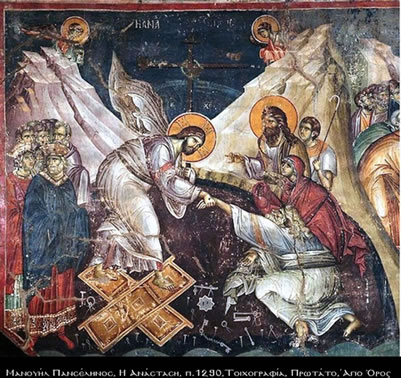 Byzantine Art is the quintessential Christian art in the service of the Church.
It follows the sacred rules established for depiction and artistic expression, serving the spiritual element rather than mere realistic representation.
Although it is characterized by abstraction, it remains deeply representational, imbued with the Greek spirit and the legacy of classical antiquity, while creatively assimilating Eastern influences.
In Byzantine iconography, form is not an end in itself; it conveys subtle and theological meanings, acting as a vessel of divine truth.
Byzantine Art is the quintessential Christian art in the service of the Church.
It follows the sacred rules established for depiction and artistic expression, serving the spiritual element rather than mere realistic representation.
Although it is characterized by abstraction, it remains deeply representational, imbued with the Greek spirit and the legacy of classical antiquity, while creatively assimilating Eastern influences.
In Byzantine iconography, form is not an end in itself; it conveys subtle and theological meanings, acting as a vessel of divine truth.
The vast chronological span and geographical expansion of Byzantine Art resulted in a wide variety of expressive forms.
Its most refined and developed expression is associated with Constantinople, the spiritual center of the civilized world at the time.
From the 4th to the 15th century, the City was the cradle of artistic creation, where mosaics and frescoes reached their highest perfection.
In the 13th century, the renowned Macedonian School emerged, distinguished by the vivid folds of garments, the plasticity of the figures, and the harmonious use of color.
Its main representatives, Michael and Eutychios Astrapas, left masterpieces throughout Serbia and Macedonia, while Manuel Panselinos-the greatest iconographer of his era-established a style that became the foundation of later iconographic tradition.
Late Byzantine painting flourished in Mystras, where the frescoes of Peribleptos are noted for their harmony, luminosity, and delicate execution.
From the mid-15th century onward, the tradition continued in Crete, giving birth to the famous Cretan School, with masters such as Theophanes the Cretan, Michael Damaskinos, and Dominikos Theotokopoulos (El Greco).
In later centuries, Fotis Kontoglou became the great restorer of Orthodox iconography, reviving it in its authentic theological and aesthetic essence.
Iconography remains, to this day, the true and living expression of Greek painting.
The knowledge of tradition and the techniques of the great masters form for me a solid foundation and a constant source of inspiration in my personal journey.
As an iconographer, I strive to express through form the spiritual drama and the sanctified beauty of the lives of the Saints, portraying their faces as transfigured human nature.
Theological principles must always be honored; yet, iconography, like all art, should be able to converse with the present age without losing its sacred character.
My mission, as an iconographer since 1998, is to communicate through sacred art the experience of faith and divine love to the believer-through the holy figures who, with struggle, sacrifice, and love in Christ, attained sanctity and the elevation of human nature.
With the help of God, I continue...
Spyridoula N. Degaitis, Iconographer
September 14, 2019
